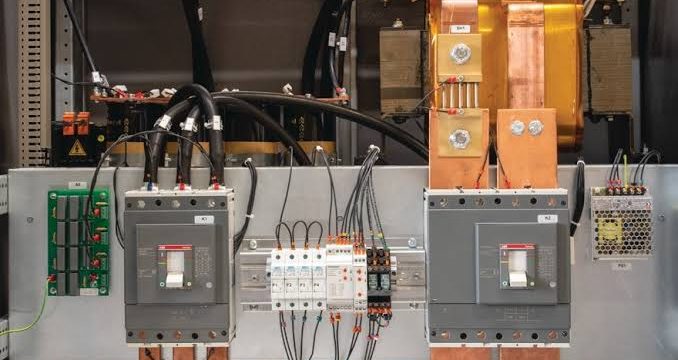
Frequency converters optimize industrial performance by precisely matching motor speed and torque directly to active load requirements. Regardless of the real needs of the operation, machinery must run at maximum output when electric motors are operated at predetermined grid frequencies. Installing solid-state frequency converters gives operators exact digital control over voltage and hertz cycles. This precise regulation cuts power consumption, minimizes mechanical strain, and protects heavy equipment against destructive electrical surges.
Precision Motor Control and Process Optimization
Conventional industrial setups rely on mechanical throttling, dampers, or restrictive valves to regulate flow rates and output speeds. These outdated methods force the driving motor to work against artificial resistance, wasting energy and causing unnecessary friction. Frequency converters eliminate mechanical bottlenecks by modifying the electrical frequency supplied directly to the motor winding.
Adjusting power input allows conveyor belts, pumps, compressors, and CNC spindles to operate at exact target speeds. Fine-tuned velocity control prevents product damage on automated assembly lines while maintaining strict manufacturing tolerances. Delivering smooth acceleration curves ensures that delicate materials handle transitions without tearing, tipping, or suffering impact damage.
Massive Energy Savings and Operating Cost Reduction
Electric motors consume the vast majority of industrial electrical power across manufacturing plants globally. Operating heavy machinery at continuous full speed during partial load cycles generates massive financial waste. Frequency converters adjust power consumption dynamically, matching electrical draw to immediate mechanical requirements.
Centrifugal systems like industrial fans and water pumps benefit exponentially from variable speed operation. Because of affinity principles, a centrifugal pump’s energy consumption can be reduced by almost half by lowering its operating speed by just 20%. Eliminating wasted kilowatt-hours directly reduces utility expenses while helping industrial facilities meet corporate sustainability targets.
Extension of Machinery Lifespan and Reduced Wear
Direct-on-line motor starts generate electrical current spikes up to eight times higher than normal operating levels. These massive electrical surges create rapid thermal expansion inside copper motor windings while subjecting gears, couplings, and drive belts to extreme mechanical shock. Frequency converters utilize controlled soft-start routines that gradually ramp up voltage and frequency together.
Smooth acceleration eliminates high starting torque spikes, keeping mechanical components well within safe physical operating stress limits. Eliminating sudden mechanical jolts prevents premature gear tooth shear, belt slipping, and bearing fatigue. Extending component working lifespans dramatically lowers emergency downtime risks while reducing routine maintenance expenses across the facility.
Power Quality Enhancement and Grid Isolation
Fluctuating utility power causes severe operational problems for sensitive automated manufacturing hardware. Frequency converters accept incoming alternating power, convert it into direct current through an internal bus, and then invert it back into clean, synthetic alternating current. This two-stage conversion process shields connected machinery from dangerous utility voltage sags, spikes, and transient noise.
Isolating the motor from external line noise maintains consistent production output during mild grid disturbances. Built-in power factor correction reduces phase shifts between voltage and current waveforms across internal factory distribution networks. Maintaining high power factor metrics eliminates costly power company penalties while optimizing total electrical capacity throughout the facility.
Integrated Diagnostics and Automated System Safety
Modern rotary frequency converters act as intelligent monitoring hubs that constantly evaluate motor temperature, current draw, phase balance, and output torque. Internal microprocessors detect subtle anomalies long before physical failure occurs, instantly triggering automated safety shutdowns or issuing maintenance alerts over industrial network protocols.
Real-time telemetry data allows engineers to implement predictive maintenance strategies instead of reacting to catastrophic breakdowns. Automated fault logging identifies underlying operational issues like jammed impellers, improper lubrication, or phase loss instantly. Utilizing automated drive diagnostics streamlines plant troubleshooting, maximizes equipment availability, and safeguards workers against equipment hazards.
Conclusion
Frequency converters transform standard industrial equipment into highly efficient, precision-controlled assets. Regulating motor speed electronically eliminates energy waste, reduces mechanical stress, and prevents costly electrical grid disturbances. Soft-starting capabilities and built-in diagnostic monitoring extend machinery service life while minimizing unscheduled facility downtime. Integrating frequency conversion technology delivers superior process accuracy, lowers operating costs, and ensures long-term industrial reliability.