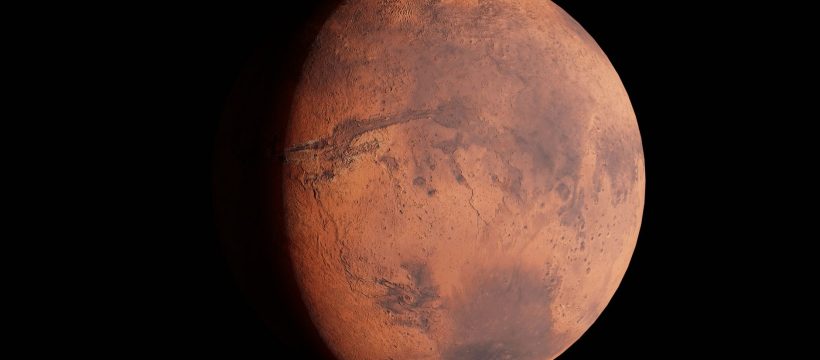
The Mars moon Phobos mission is poised to be a historic venture as Japan prepares to collect samples from the Martian moon. This ambitious project aims to enhance our understanding of the cosmos.
Overview of the Mars moon Phobos mission
The upcoming Mars moon Phobos mission marks a significant advancement in space exploration, as Japan prepares to launch the world’s first mission aimed at collecting samples from this intriguing celestial body. Phobos, one of Mars’ two moons, has long captured the interest of scientists due to its unique characteristics and potential insights into the history of the Martian system.
This mission is designed to achieve several key objectives:
- Sample Collection: The primary goal is to gather samples from the surface of Phobos, which could provide invaluable data about the moon’s composition and origin.
- Understanding Mars’ Environment: By studying Phobos, researchers hope to gain a better understanding of the conditions surrounding Mars and its moons.
- Technological Advancements: The mission will also test new technologies for future exploration, including sample return techniques.
As humanity continues to push the boundaries of space exploration, the Mars moon Phobos mission represents a pivotal step towards deeper knowledge of our solar system.
Significance of collecting samples from Phobos
The mission to collect samples from Mars moon Phobos holds significant importance for several reasons. First, it offers a unique opportunity to study the composition and history of Mars and its moons, which are believed to contain valuable information about the early solar system.
Phobos, being one of the two moons of Mars, is thought to be a captured asteroid, providing insights into the processes that shaped celestial bodies. By analyzing the surface samples, scientists can gather data on:
- The geological history of Mars and its moons.
- The presence of water and organic materials that could suggest the potential for life.
- The impact of space weathering on small celestial bodies.
Additionally, the Mars moon Phobos mission could pave the way for future manned missions to Mars, as understanding the resources available on Phobos can help develop sustainable exploration strategies. Thus, this mission is not just an exploration of Phobos but a critical step forward in our quest to understand the universe and our place within it.
Japan’s role in space exploration
Japan has emerged as a key player in space exploration, particularly with its upcoming Mars moon Phobos mission. The Japan Aerospace Exploration Agency (JAXA) is poised to make history by launching the first mission designed to collect samples from Phobos, one of Mars’ two moons. This ambitious initiative reflects Japan’s commitment to advancing our understanding of the solar system.
JAXA’s involvement in this groundbreaking mission is significant for several reasons:
- Technological Innovation: The Phobos mission will showcase Japan’s cutting-edge technology, including advanced spacecraft design and sample collection techniques.
- International Collaboration: The mission opens doors for partnerships with other space agencies, fostering a collaborative approach to exploration.
- Scientific Contribution: By analyzing Phobos’ surface material, scientists hope to uncover valuable insights into the history of Mars and the formation of its moons.
Ultimately, Japan’s role in the Mars moon Phobos mission not only highlights its capabilities but also reinforces the importance of global cooperation in the quest for knowledge beyond our planet.
Challenges faced in the Phobos mission
The Mars moon Phobos mission presents several challenges that must be addressed to ensure its success. These obstacles range from technical difficulties to the harsh environment of space.
Some of the key challenges include:
- Landing Precision: Achieving a safe and precise landing on the irregular surface of Phobos is crucial. The moon’s low gravity complicates landing maneuvers, increasing the risk of failure.
- Sample Collection: Developing effective methods to collect samples from the moon’s surface poses another significant hurdle. Instruments must be designed to operate in extreme conditions while ensuring that samples are not contaminated.
- Communication Delays: The distance between Mars and Earth results in communication delays, making it challenging to respond quickly to issues that may arise during the mission.
- Technological Limitations: The mission will require advanced technology capable of functioning in a unique environment. Ensuring reliability and efficiency in this context is paramount.
Overcoming these challenges is critical to the success of the Mars moon Phobos mission and its potential contributions to our understanding of the Martian system.
What scientists hope to learn from Phobos
Scientists are eager to uncover the mysteries of Mars moon Phobos through this groundbreaking mission. They aim to learn about the moon’s composition, surface features, and its potential role in understanding the history of Mars itself. By collecting samples from Phobos, researchers hope to gain insights into:
- The origin of Phobos: Analyzing the moon’s material may reveal whether it is a captured asteroid or a remnant from the early solar system.
- Space weathering: Understanding how cosmic radiation and micrometeorite impacts have altered Phobos’ surface could provide clues about the environmental conditions in space.
- Potential for resource utilization: Investigating the presence of water ice or other valuable resources on Phobos may inform future exploration missions and the possibility of using these resources for human habitation.
- Life beyond Earth: Studying the samples may help scientists determine if organic materials exist, offering implications for life beyond our planet.
The Mars moon Phobos mission represents a significant step in unraveling the complexities of our neighboring celestial body.
Timeline for the Mars moon Phobos mission
The timeline for the Mars moon Phobos mission outlines a series of critical milestones leading up to the launch and execution of this groundbreaking project. Key dates include:
- 2024: Initial preparations and finalizations of the spacecraft design will take place, ensuring all systems are ready for the mission.
- 2025: Launch window opens for the mission, with the aim of sending the spacecraft towards Phobos, one of Mars’ two moons.
- 2026: The spacecraft is expected to arrive at Phobos, where it will begin its observational phase.
- 2027: Sample collection operations are planned to commence, allowing scientists to gather crucial data and materials from the moon’s surface.
- 2028: The return journey will begin, with the spacecraft expected to head back to Earth.
- 2029: Arrival back on Earth, where the samples collected from Phobos will be analyzed.
This timeline emphasizes the ambitious nature of the Mars moon Phobos mission, marking a significant step forward in space exploration.
Future implications for Mars exploration
The Mars moon Phobos mission holds significant future implications for our understanding of the Red Planet and its moons. By successfully collecting samples from Phobos, scientists aim to unlock secrets about the formation and evolution of not only Mars but also other celestial bodies in our solar system.
This mission may pave the way for more ambitious endeavors, including potential human exploration of Mars. The data gathered from Phobos could offer insights into the Martian environment and its capacity to support life, which is essential for planning future manned missions.
Moreover, the techniques developed during the Mars moon Phobos mission may enhance our capabilities for planetary exploration. The technologies for sample collection and return can be applied to future missions targeting other planets and asteroids.
In summary, the implications of this mission extend far beyond Phobos itself, as it could revolutionize our approach to exploring Mars and beyond, making it a smart step for space exploration.
Photo by Zelch Csaba on Pexels